Featured

My First Blog Post

Finding the marrow through the bone

Adversity, which looks and feels like such a determined enemy, can become a valuable ally. Only you can decide which it will be.

— Joni Eareckson Tada

Fibrodysplasia Ossificans Progressiva (FOP) is one of the world’s rarest diseases and the only known to man that turns one organ system into another. To put it in simple terms, it turns muscles, ligaments, and tendons into bone. FOP appears at a variety of ages in different patients, but it lasts forever. As you grow older, it will only get worse and more debilitating. I chose to name my blog Medulla Ossium because it is the latin translation of bone marrow. When I was brainstorming, I wanted it to be about the struggles I have because of FOP, but also looking beyond the bone. It was then that I thought of bone marrow. Bone marrow is the tissue found in the spongy part of bone and it is where new red blood cells are made; it is a place of growth. I found it fitting that you must look beyond the bone in order to reach this new growth, and that is just what I plan on doing.

Feminine Disability: An oxymoron?

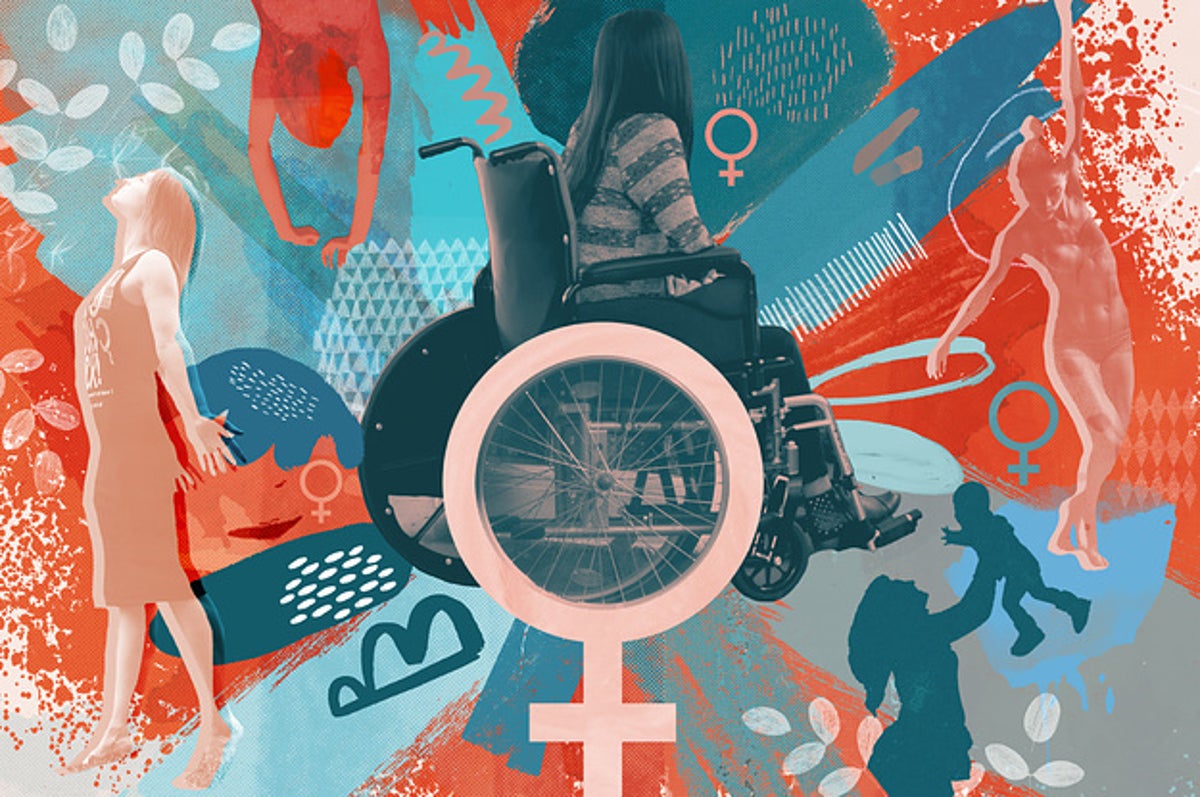
It’s been a while since I’ve written anything about FOP. I couldn’t decide if I had any more to share. I’ve also been pretty busy. For a quick life update: I now live in Los Angeles and go to UCLA law! And I love it here. But if there is one thing most people know about LA it is how image obsessed the culture. From plastic surgery to hair extensions and everything in between, people here put effort into their appearance (and $$$).

You’re probably wondering what this has to do with being disabled and where I’m going with this, but I have a point. As a disabled woman, it is very difficult at times for me to express my femininity. It isn’t that I feel less feminine because I’m disabled, but I do feel like I’m more limited in how I am able to express it. The main limitation is my hair. Since Moving to LA, I decided to no longer have a care taker and instead go to a salon twice a week to get my hair washed. Believe it or not it was the far cheaper option. However, salons in Westwood all seem to be having staffing issues and I kept having appointment after appointment cancelled. While getting your hair appointment cancelled might only be a slight inconvenience for most, it means my hair goes unwashed until the next time I can get an appointment. This leaves my hair greasy and me feeling insecure without being able to do anything about it. Even when I do get my appointments, that is an extra $30-40 a week that I have to spend just to get my hair washed, something able bodied people easily do for free.

Beyond washing my hair, I have no options for hairstyles. Unless I can get a friend to do something to it, my hair will be down and natural. I’m unable to even put it up if I get hot. Brushing my hair is about the only thing I can do to it. It’s not the end of the world and I like my natural hair, but it would be nice to be able to curl it or braid it, or literally do anything different to it.

Moving on from hair to makeup. I can do my makeup at a very basic level: mascara and eyeshadow. But with my limited shoulder movement and the way my wrists are, eyeliner is totally out of the question as is an even application of foundation.

Shaving is also very difficult. I can reach most of my legs except for the outer half of my right shin. So I can either decide to shave everywhere except that area or to not shave at all. As for my armpits, they’re nearly impossible to shave cleanly due to my locked shoulders.

My toenails are yet another struggle. I can barely reach my feet, let alone hold nail clippers at the right angle to cut my toenails. Similar to shaving my legs, it is something I can do partially, but definitely not a thorough job.

While you might read all of this and think that it is TMI, my goal is to make you uncomfortable. It is when you’re uncomfortable that you really think and are open to forming new opinions. It is hard to be feminine and disabled. Because many of the things that society views as feminine are physical which leaves physically disabled women behind. And perhaps there is a lot of toxicity within this notion of femininity, but it doesn’t make it any less frustrating that I can’t participate and make those choices for myself. Performing femininity as a disabled woman is not only harder, but more expensive. If I want my hair done or my nails painted, I have to pay for it or count on the graciousness of a friend. Next time you are showering and you are able to wash your hair, shave, and cut your toenails, take a second and be grateful. Not everyone has the privilege of being able to express their femininity how they would like to.

I’m also not the first disabled woman to write about this so please go read more and educate yourself. https://rootedinrights.org/the-labor-of-expressing-femininity-as-a-disabled-woman
The Necessary Overthinker

I have always been a very cerebral person and I couldn’t tell you a time where my mind wasn’t racing with thoughts. But recent reflection has made me realize just how much of my overthinking is due to FOP.

Shy, socially anxious, immature, however you want to label it, I am often uncomfortable in social situations. Whether it’s meeting a delivery person at the door to grab my food, going shopping alone, or worse yet traveling alone, these seemingly harmless events are nowhere near as easy for the disabled. Just in the last two weeks alone, I have had to ask for help to reach something off a top shelf in CVS, struggled to carry a large pizza box up to my apartment by myself while opening the door, and struggling to carry my suitcase up the stairs of a train on my way to Chicago.

Growing up my family and friends always said that I needed to grow up and get over my “fears”. They would tell me that I had nothing to be anxious about and I was just overthinking it. What they didn’t realize is that overthinking is often necessary for disabled people. I don’t have the privilege of entering a space and knowing it’ll be accessible to me. Sure, once I explain my situation people are usually willing to help, but that’s emotionally exhausting to do all of the time. I don’t think people realize quite how mentally and emotionally taxing being disabled is. I’m constantly thinking “what if there is no one around to help me”. If there is one thing that the pandemic has taught me, it is that people are not nearly as caring and empathetic as we’d like to think. Having to go through life hoping that I’ll find kind strangers along the way to help me when I need it is honestly scary. In a society that is increasing individualistic, I worry that one day I ‘ll find myself in a situation where no one is willing to help me.

So let’s say I’m in the CVS and I do find someone who is willing to help me grab the Nutella off the top shelf. It’s still unfortunate to know that I cannot go shopping alone. There will always be something off a high shelf that I need and I’ll have to wait until someone comes along who is willing to help. At CVS, it was 5 minutes that I waited. That might not seem like much, but imagine how helpless you would feel just waiting in an aisle for 5 minutes for someone to help you grab a jar of Nutella.

I used to be such an optimistic person, but as I’ve gotten older and seen more of the world I’ve seen how nasty it really is. I still believe that the human experience is a beautiful thing. But wow are there some really selfish people we share this Earth with. I’ll admit, I’m selfish at times too, we all are. But I’m also pretty selfless at times. If there are a few pieces of advice I could give able-bodied people it’s these: never make someone feel bad for asking you for help with something; don’t assume people need help, but ask if they would like it if you see them struggling; do something every once in a while for no personal gain. And as always: just be kind; you never know what people are going through.

Acknowledge Ableism

As an American society, we are very hesitant to admit our prejudices. The important thing is to remember that privilege is not your fault, but it is your responsibility to be aware of it and to try to use it for good. There is no need to be guilty for not being discriminated against, nobody wants that to happen to you. However, there is no room for denying privilege. Talks of privilege usually come up in regards to race relations, but there are many different types of privilege.

Anyone who has lived in Michigan between November and March knows what winter is. Others might be somewhat familiar with the concept, but Michigan winters are some of the harshest winters in the U.S. Going to school at the University of Michigan, you see all types of winter wear. Everyone’s favorite to mock: the Canada goose coat. In my second winter spent in Ann Arbor, I’ve noticed a divide between in state and out of state students. Students from Michigan try to prove their toughness by not properly dressing for the weather or exclaiming that it’s not actually that cold. When I complained about it being 15 degrees, someone told me that I was from Michigan so I should have learned how to suck it up by now.

PSA: WINTER IS NOT THE SAME FOR EVERYONE

It’s not something you can expect people to think about unless they’ve witnessed it firsthand, but being disabled in the winter is horrible, for many reasons. For wheelchair users, the snow and ice pose difficulty in getting to and from places. For me, it means being cold, A LOT. Yes I’m from Michigan and I should’ve sucked it up by now according to you, but I can’t do the same things others can to stay warm. First of all, I weigh 85 pounds. I have very little body fat and poor circulation which means I naturally run cold. Furthermore, I can’t reach my head to wear a hat. Next time you go outside and walk for 20 minutes in the middle of January in 20 degree weather with 15 mph winds without having your head or ears covered, I’d like to see you not complain about how cold you are.

To be frank, I’m sick of people passing judgements about things they know nothing about. YOU do not know what someone is going through. Therefore, you should not be telling them to their face that they are weak. Getting through a day in the winter is a serious struggle for me and other disabled people. I’m cold and there’s nothing I can do about it. I still have to walk to class. So next time you want to tell someone to be quiet and suck it up, DON’T.

Yes the privilege of being able to wear a hat seems minimal compared to other privileges that groups are afforded, but that doesn’t change the fact that it’s a privilege. So this winter be grateful for the few extra pounds that help insulate you and be grateful for your hat and scarf you put on when you walk out the door.

Although this specifically is about winter, it applies to everything. If you are not disabled, you are most likely ableist. I don’t blame you; I was too before. But now that you know, please try to be more cognizant of different abilities. We understand that not everything can be accommodated for us. However, being understood and having an effort made to include us goes farther than you will ever know. It gets tiring to constantly have to leave environments or not go in the first place because they’re unsuitable for us. JUST BE AWARE.

The Freshman 15

Almost every single person I meet comments on how small I am, whether it be that I am only 5 feet tall or that I am skinny. I rarely get through a day without someone pointing out that I am small. I have always been skinny and I never had a huge appetite, but I was at a relatively healthy weight throughout most of my childhood. However, that all changed after my jaw locked.

For many years I weighed around 95 pounds. After my jaw locked, I dropped to 88 pounds. Seven pounds might not seem like a lot, but for me that is mass that I could not afford to lose. Over the summer, I took it upon myself to start tracking what I was eating and I even saw a dietician to see what my options were in order to get my weight back up to a healthy level. I was able to get back up to 92 pounds by eating 4 meals a day which was a total of around 1,800 calories a day. The majority of my calories came from liquids. I drank Ensure and made protein smoothies everyday with everything I could possibly put in them to make them 750 calories.

Unfortunately, I lost all of the weight I had gained back once I got to school. Not only did I begin walking an average of 5 miles each day, but eating and making my smoothies became a lot harder. The convenience of the dining halls turned into a struggle to find something I could eat. I kept making smoothies in my dorm, but it became very difficult to keep all of the ingredients in my room and I gave up after a few days.

I think it’s safe to say that a lot of people in America have an unhealthy relationship with food. However, the dominant discourse is people loving food, but feeling guilty for eating it because of how it will affect their weight. While this is a valid struggle that I don’t want to demean in any way, it is by no means the only problem people have with food. For me, I used to love food. I was the world’s pickiest eater, but I would eat burgers and boneless wings for days. Not only am I not able to eat half of the foods I would eat on a regular basis, but eating anything has become a physically and mentally taxing activity. My jaw gets very tired after nibbling on even a small piece of food. Frequently, I have to stop eating or take breaks. Not because I’m full, but because I don’t have any more energy to get the food into my mouth. Because of the mental difficulty of eating, my appetite has almost disappeared. I am very rarely hungry anymore. The worst part about this is that I have to force myself to eat food even when I don’t feel hungry.

If you gain one thing from reading this post, let it be this: don’t ever tell someone you wish you had their problems. I understand that there are thousands if not millions of people currently trying to lose weight. Trust me, they’ve all told me they would kill to be in my situation. I don’t like people doing this for a multitude of reasons. The first is that telling anyone, not just me, that you would be glad to have their problems makes it seem like their problems aren’t real. If someone trusts you enough to tell you something they’re struggling with, the worst thing you can do is make them seem invalid. Second, it’s not the truth. I lost count of how many people have told me they would love to be in my situation. I can guarantee you after one day they would be begging for their old life back. In their situation, they would love for it to be nearly impossible to gain weight so that’s all that they hear when I talk. They fail to recognize the context. I can’t eat most solid foods unless they’re soft and flat, I’m barely hungry, and eating has become a chore. The hardest part is that whether I meet my calorie goal or not, I have to wake up the next day and do it all over again. I can never take a break from being worried about my weight. If people really heard this part of the story, they wouldn’t be so envious. While there are some problems that are worse than others, it should never become a competition or comparison. It is natural for us to want to be the opposite of what we are, but it’s important to recognize that everyone has problems and we need to be sensitive before saying someone’s problems are more desirable than our own. We don’t all gain the freshman 15, some of us lose it.

Meet Me

My name is Natalie McGuire. I am a twenty year old senior at the University of Michigan. I am a daughter, a sister, a friend, a dog person, a feminist, a Canadian, an immigrant, an avid reader, a music lover and so many other things. The thing that I’m probably the least likely to tell you is that I am disabled. I like to think of myself as a person with a disability rather than a disabled person. While this seems like a silly thing to the able-bodied, I don’t want my disability to define me. It is a part of who I am, but it isn’t my entire identity. Upon first glance, you probably won’t notice I’m disabled. I’m not in a wheelchair, and I don’t use any other assistive mobility devices. I also have full mental capacity. My disability is Fibrodysplasia Ossificans Progressiva.

I was diagnosed with FOP in 2011 when I was ten years old. That same year I lost all upward mobility of my arms. In the span of three months, I went from full physical functioning to not being able to raise my arms above my head. This was the result of bone forming under my arms that prohibits movement. My FOP was fairly dormant for the next few years with small flare ups here and there. It came back in full force in December 2016. My neck and shoulders began to swell. This was the first time that FOP had affected my facial characteristics which was very mentally challenging. The swelling eventually went down and I didn’t lose any jaw or much neck mobility. Then, my arm began to swell in April. I had flare ups in my upper arm and my forearm. They eventually moved towards each other and I lost the ability to straighten my right elbow. Most recently, I had a flare up in May 2019 that locked my jaw. I have about 1 cm of opening between my teeth. This has by far been the most challenging flare to date both physically and mentally.

I never talk about FOP unprovoked; I try to suppress it to the moments it’s absolutely necessary and nothing else. However, I’ve recently realized that not talking about it is a detriment to my own physical and mental health. Not telling people puts me in anxious and possibly dangerous situations. Not only have I decided to share my story for selfish reasons, but I also finally understand my responsibility to raise awareness for FOP, rare diseases, and disabilities in general.

Design a site like this with WordPress.com
Get started